

 436 South Hill Street Griffin, Georgia 30224


How Commercial Truck Data (ELDs) Can Make or Break Your Accident Claim
Why Commercial Truck Data Matters After a Crash
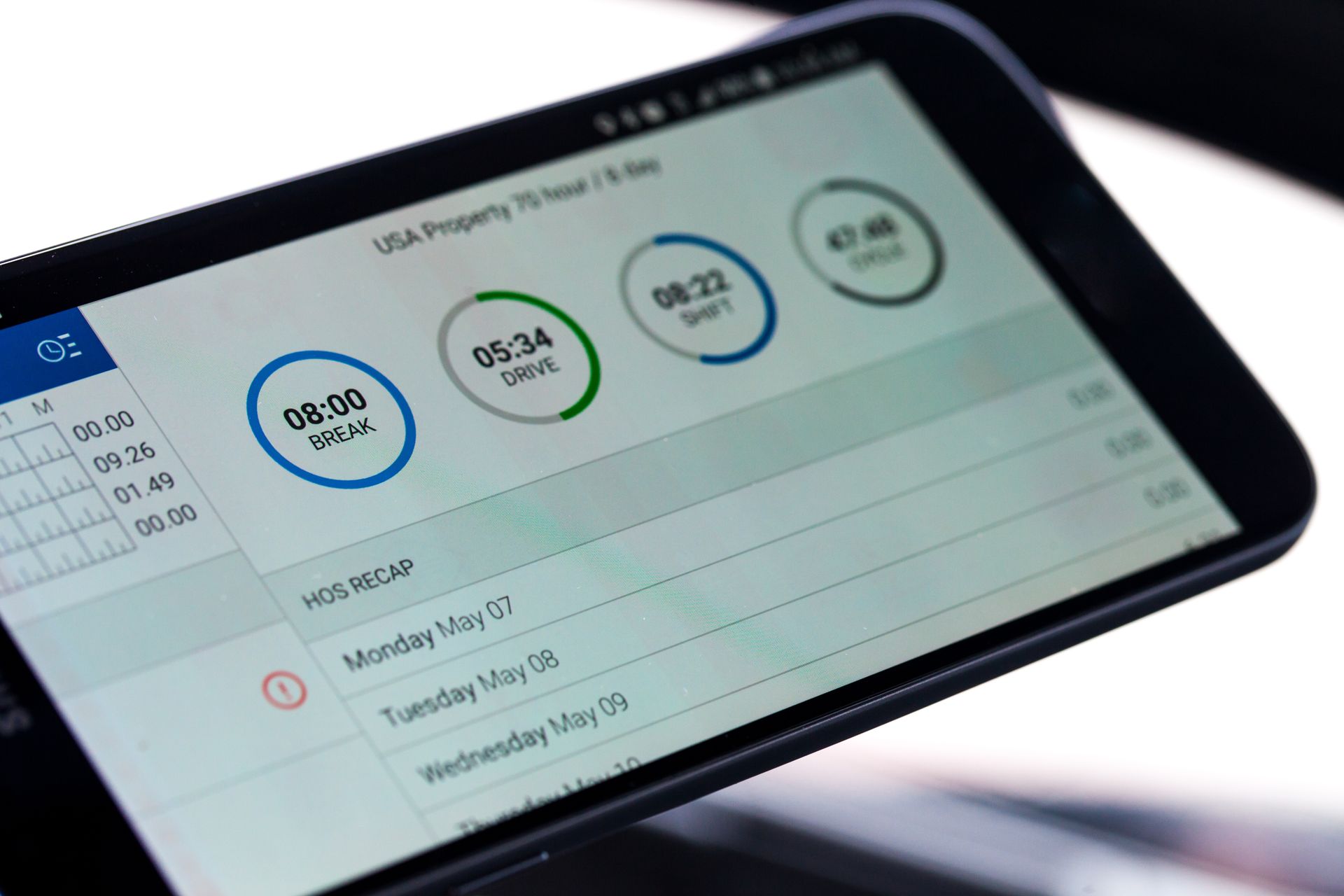
If you've been injured in a crash with a commercial truck, there's a data trail most people never think to ask about. Unlike a passenger car, commercial trucks are required to carry an electronic logging device (ELD) that automatically records the driver's hours, speed, and driving patterns. That data can be some of the strongest evidence in your case — but only if it's preserved before it disappears.
At Cramer & Peavy, one of the first things we do in a truck accident case is move to lock down this data. Here's why it matters, what it actually captures, and why timing is everything.
What an ELD Actually Records
Federal law requires most commercial drivers to use an ELD that automatically logs their hours of service. Under FMCSA rules, property-carrying drivers generally can't drive more than 11 hours after 10 consecutive hours off duty, and all of that driving has to happen within a 14-hour on-duty window that starts the moment they come on shift. Drivers are also required to take a 30-minute break before 8 cumulative hours of driving, and they're capped at 60 hours on duty across 7 days (or 70 across 8), with a 34-hour reset available to start the weekly clock over.
An ELD isn't just a logbook — it pulls directly from the truck's engine control module, so it also captures speed, sudden braking events, and in some cases GPS location history. If a driver was speeding, braking hard right before impact, or had been on the road longer than federal rules allow, that's not a matter of he-said-she-said. It's recorded.
For example, if a driver was required to take a 30-minute break after 8 cumulative hours of driving but the ELD shows no break was logged before the crash, that's a documented violation — not something an insurance company's attorney can argue away with a driver's recollection of events.
Why This Evidence Can Disappear Fast
Federal regulations require motor carriers to retain ELD records for a minimum of 6 months — but that's a regulatory floor, not a guarantee. Many trucking companies use additional telematics systems layered on top of the ELD, and that more granular engine and GPS data often cycles on a much shorter timeline as part of routine business practice, long before anyone outside the company asks for it.
That's the core problem: without a legal hold in place, the company has no obligation to go out of its way to save data for a claim it doesn't know is coming. By the time an injured person has recovered enough to think about hiring an attorney, weeks may have already passed — and with them, potentially, the most objective evidence in the case.
It's also worth knowing that this data isn't held by one single party. The ELD itself is typically managed by the trucking company, but the underlying telematics platform is often operated by a separate third-party vendor — which means a preservation request may need to go to more than one place to actually capture everything.
How We Preserve This Evidence
- We send a formal evidence-preservation (spoliation) letter to the carrier as early as possible, creating a legal obligation to retain all ELD, telematics, and related records
- We identify every potential source of data — the ELD itself, the engine control module, dash cams, and any third-party telematics vendor the carrier uses
- We pursue this evidence formally through discovery if litigation becomes necessary
- Where needed, we work with accident reconstruction experts to interpret the data and connect it to what happened at the scene
What This Evidence Can Prove
ELD and engine data can establish whether a driver had exceeded the 11-hour driving limit or the 14-hour window at the time of the crash — a documented hours-of-service violation that supports a negligence claim against both the driver and the carrier. It can also show the truck's exact speed and braking behavior in the seconds before impact, which is often more reliable than witness recollection and harder for an insurer to dispute.
This kind of evidence doesn't just support your version of events — it can be the difference between a lowball settlement offer and one that actually reflects what happened.
Consider a rear-end collision where the truck driver claims the other car stopped suddenly. If the ELD and engine data show the truck was traveling well above the posted speed limit with no braking recorded until a fraction of a second before impact, that single data point can shift the entire liability picture — regardless of what either driver remembers or says happened.
If You've Been in a Truck Accident, Time Matters
The sooner an attorney is involved, the sooner a preservation letter goes out, and the better the chances that critical data is still there when it's needed. If you or a loved one has been injured in a commercial truck accident, don't wait to find out what evidence exists — contact Cramer & Peavy for a free consultation.


